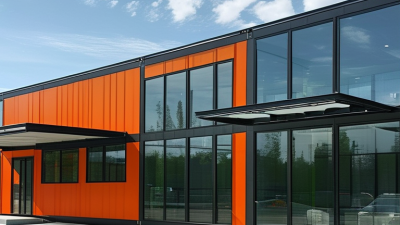
Top 10 Prefab Commercial Building Suppliers Worldwide

Choosing a prefab commercial building supplier can shape a project long before the first steel frame arrives. The right partner helps coordinate design, manufacturing, delivery, and installation. A poor fit may leave gaps between drawings and site conditions. Details matter.

This guide to the Top 10 Prefab Commercial Building Suppliers Worldwide offers a starting point for comparing companies, not a universal ranking. Supplier capabilities vary by region, building type, and project scale. Some specialize in warehouses or workshops; others provide modular offices, retail spaces, or larger commercial facilities. Buyers should examine completed projects, engineering support, material specifications, quality controls, and after-sales service. Ask how the supplier handles insulation, ventilation, fire-safety requirements, and changes during construction. Get clear answers in writing.

A prefab commercial building can reduce on-site work, but it still depends on careful planning. A delivery schedule is only useful when transport access, foundations, utilities, and local requirements are considered. Request references for projects similar to yours, and compare quotations on the same scope. The lowest price may exclude essential items. And timelines can shift. Even experienced suppliers face delays when designs change or site preparation falls behind. Use this overview to identify candidates and prepare better questions. Then verify claims directly with each supplier and with qualified local professionals. No list can replace that step.
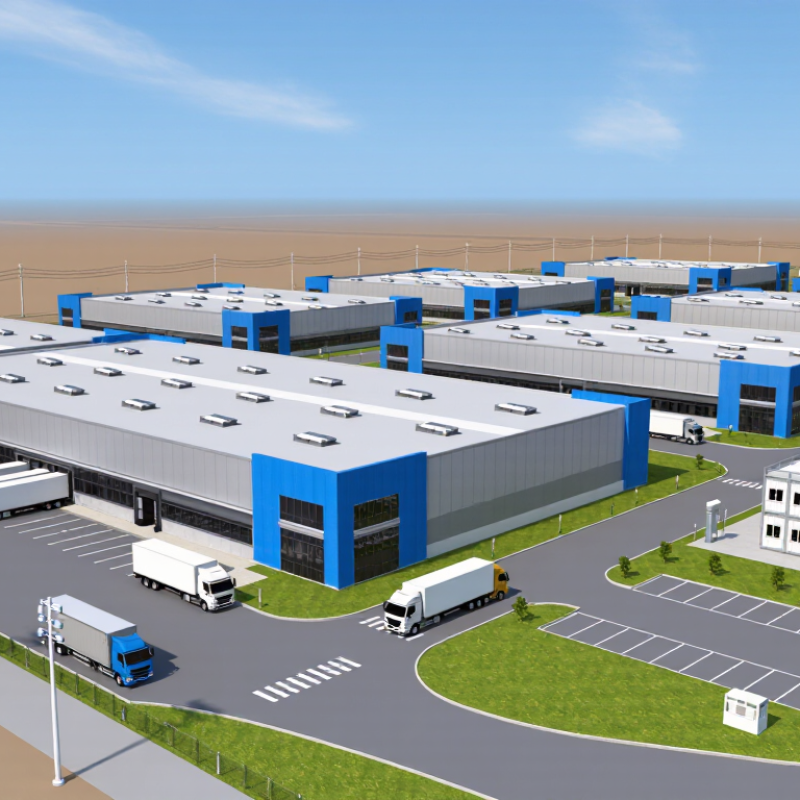
Top 10 Prefab Commercial Building Suppliers Worldwide

Understanding Prefabricated Commercial Buildings

Prefabricated commercial buildings are engineered off-site, then assembled on prepared foundations. This approach covers offices, clinics, retail units, warehouses, and educational facilities. A useful top-ten supplier list should therefore assess more than factory size. It should examine structural standards, design coordination, delivery records, fire performance, and after-sales support.

The commercial value is substantial. McKinsey & Company reported that modular construction can reduce project schedules by 20% to 50% and lower costs by up to 20% in suitable conditions. Grand View Research also estimated the global modular construction market at more than 80 billion US dollars in 2022, with continued growth expected through 2030. These figures are promising, but they are not automatic guarantees. Site access, transport distance, local codes, and foundation accuracy can quickly change the result.

Details matter. A reliable supplier should provide shop drawings, material certificates, load calculations, and clear inspection records. On a typical project, a wall panel may arrive with insulation, conduits, and window openings already installed. That saves labor, but one misaligned connection can delay several trades. The model is not flawless. Weather exposure during assembly, limited customization, and weak local installation teams remain practical concerns. Buyers should request completed-project evidence and independent quality checks before comparing prices.

Criteria for Assessing Global Building Suppliers

Assessing global prefab commercial building suppliers requires more than comparing quoted prices. Review structural calculations, connection details, fire and moisture protection, and documented quality controls. Ask for inspection records and references from projects with similar spans, climates, and occupancy. A factory tour can reveal whether components are labeled clearly and stored above wet floors. Small details matter.

Delivery capability is equally important. Request a sample schedule showing design approvals, production slots, packing, shipping, and site assembly. Check how the supplier manages damaged panels, replacement parts, and changes after drawings are approved.

The UN Environment Programme’s Global Status Report for Buildings and Construction 2024 reports that buildings and construction account for 32% of global energy use and 34% of energy-related CO₂ emissions. This makes insulation performance, material efficiency, and credible environmental documentation relevant selection criteria—not just marketing claims. Still, reported performance may differ from results on a real site.

Tips

Compare suppliers using the same project brief, including wind and snow loads, usable floor area, finish level, and delivery destination. Request evidence behind energy or carbon claims, plus clear warranty exclusions. Then speak with a past client about schedule changes and after-sales support. No supplier is perfect; unclear answers deserve a second look.

Profiles of Ten Leading Suppliers Worldwide

The ten supplier profiles are best read as capability snapshots, not a universal ranking. They span North American steel-frame specialists, European modular manufacturers, East Asian prefab producers, and regional firms serving remote project sites. Their work ranges from warehouse shells and retail units to clinics and multi-storey offices. Some deliver only the structural frame; others coordinate design, fabrication, transport, and installation. That difference matters. A low factory price can lose its appeal when crane access, local foundations, or fire-rating requirements are excluded.

McKinsey’s 2019 report, Modular construction: From projects to products, found that modular methods could accelerate project delivery by 20–50% and reduce costs by up to 20% in suitable cases. These are potential gains, not guarantees. The ten profiles therefore compare practical measures: engineering support, documented quality controls, delivery reach, customization, and experience with local building codes. Ask for project references with similar spans and site conditions. Check how joints, insulation, drainage, and future extensions are handled. Small details matter.

A supplier with strong factory output may still struggle with local permitting or on-site sequencing. Another may offer flexible layouts but have limited transport capacity. Not glamorous. Buyers should compare lead times, warranty scope, and the assumptions behind quoted prices. The profiles are most useful as a shortlist: match each supplier’s demonstrated strengths to the building’s use, location, and operating life. McKinsey & Company, Modular construction: From projects to products, 2019.

Top 10 Prefab Commercial Building Suppliers Worldwide

Typical project delivery timeline by commercial prefab building application

Prefabricated commercial buildings generally shorten on-site construction by moving structural production, façade work, and interior preparation into controlled factory environments. The timeline ranges shown are industry reference estimates for complete project delivery, excluding land acquisition, permitting, and utility connection delays. Office, education, healthcare, retail, and hospitality projects typically require more coordination than simple warehouse or storage facilities.

Comparing Supplier Products, Markets, and Services

Top 10 Prefab Commercial Building Suppliers Worldwide

Comparing Supplier Products, Markets, and Services

A useful review of ten leading prefab commercial building suppliers starts with product suitability. Their catalogs may include modular offices, retail units, warehouses, clinics, and multi-story workspaces. Steel frames usually support longer spans, while insulated panels improve temperature control and installation speed. Buyers should examine floor loading, fire resistance, acoustic performance, and expected service life.

Markets also shape supplier performance. A company experienced in tropical regions may offer stronger moisture protection and ventilation designs. Suppliers serving colder areas often provide thicker insulation and improved snow-load engineering. I would request drawings, material samples, and previous project references before comparing prices. Delivery changes everything. Shipping distance, port access, foundation readiness, and local assembly teams can alter the final budget significantly.

Service quality separates a convenient supplier from a costly one. Strong providers usually offer structural calculations, permitting support, installation supervision, maintenance guidance, and clear warranty terms. Response times matter when a roof panel arrives damaged or site measurements change. No supplier scores perfectly. Some have excellent engineering but limited regional support, while others offer fast delivery with fewer customization options. That gap matters. Buyers should also verify compliance with local construction rules through qualified professionals, rather than relying only on sales documents. A lower quotation may hide transport exclusions, site preparation costs, or future replacement difficulties. My comparison would score products, market experience, technical evidence, and after-sales support separately, because combining them can produce a misleading ranking.

Factors to Consider When Selecting a Supplier

Choosing a prefabricated commercial building supplier requires more than comparing the quoted price. Check experience with projects similar to yours: a warehouse needs different spans, loading capacity, and insulation than a clinic. Ask for drawings, material specifications, and references you can verify. On site, details matter. Do the wall panels arrive labeled? Are connection points easy for local crews to inspect? Small uncertainties can become costly delays.

Schedule and cost claims deserve careful scrutiny. McKinsey’s 2019 report, “Modular construction: From projects to products,” notes that modular methods can shorten construction schedules by 20 to 50 percent in suitable projects. That is a potential, not a promise. Request a project-specific timeline covering design approvals, factory production, shipping, and installation. Compare the supplier’s quality-control process, warranty terms, and ability to provide replacement components. Also confirm how changes are handled after production begins. Uncomfortable question, but useful: who pays when a dimension is wrong?

Evaluate the whole delivery system, not just the factory. Transport distance, crane access, local labor, and site preparation can erase apparent savings. Ask suppliers to identify assumptions behind their estimates and provide a clear list of exclusions. A polished brochure is not evidence. Independent inspections and documented test results are better. Reflect on fit, too: the lowest bid may still be the wrong choice if service support ends after installation.

Top 10 Prefab Commercial Building Suppliers Worldwide - Factors to Consider When Selecting a Supplier

Use these evidence-based criteria to compare suppliers. Applicable codes, certifications, permits, and product requirements depend on the project location and building use.

No. Selection factor What to verify Why it matters
1 Building-code capability Ask for project-specific structural calculations and a compliance matrix referencing the codes adopted by the local authority. Building codes and approval processes vary by jurisdiction, occupancy, and site conditions.
2 Structural design and loads Confirm that design accounts for applicable wind, snow, seismic, dead, and live loads, with calculations reviewed by appropriately licensed professionals where required. Loads depend on the site, building use, and governing design standard; a generic design may not be suitable.
3 Quality management Check the scope and validity of any ISO 9001 certification, and review inspection records, nonconformance procedures, and traceability documentation. ISO 9001 sets requirements for a quality management system; certification does not by itself guarantee a specific building’s performance.
4 Materials and product documentation Request material specifications, test reports, product declarations, and details of coatings, insulation, and corrosion protection. Documentation helps confirm that specified components are suitable for the project’s environment and regulatory requirements.
5 Fire and life-safety provisions Verify fire-resistance ratings, tested assemblies, egress coordination, and fire-protection interfaces required for the building’s occupancy and local code. Fire-safety requirements are determined by the applicable code, occupancy classification, and building configuration.
6 Scope and interface coordination Document what is included in the supply contract, such as foundations, engineering, building envelope, doors, windows, and mechanical, electrical, and plumbing interfaces. Clear scope boundaries reduce omissions, duplicated work, and disputes between project parties.
7 Manufacturing and delivery planning Request a milestone schedule covering design approval, production, shipping, site access, unloading, and installation, including stated assumptions and exclusions. Actual lead times depend on design finalization, production capacity, transport, customs, and site readiness.
8 Installation and local support Confirm who provides installation, supervision, training, commissioning support, and local-language documentation, and define responsibilities in writing. A building package may require local contractors and permits even when major components are prefabricated.
9 Warranty and after-sales service Review warranty duration, covered components, exclusions, claim process, spare-parts availability, and response responsibilities. Warranty terms vary by contract and component; compare the written terms rather than relying on general assurances.
10 Total project cost and contract terms Compare itemized quotations, payment milestones, freight and duties, site-work exclusions, change-order rules, insurance, and delay provisions. The lowest quoted package price may not represent the lowest total delivered and installed project cost.

Evaluation tip: Compare suppliers using the same project brief, site information, code basis, scope boundaries, and delivery assumptions. Validate certificates and references directly with the issuing body or project owner.

TOP