Top 10 Prefabricated Building Manufacturers in China
China’s prefabricated building sector is attracting attention as developers seek faster delivery, tighter quality control, and less on-site disruption. Yet factory production alone does not guarantee a successful project. Design coordination, transport planning, installation teams, and after-sales support matter just as much.
McKinsey’s 2019 report, “Modular construction: From projects to products,” estimated that modular construction could shorten schedules by 20 to 50 percent and reduce costs by up to 20 percent. These are potential gains, not promises; results depend on project design, local supply chains, and execution. The distinction matters. A plant tour may look impressive, but consistent quality across completed projects tells buyers more.
UK construction adviser Mark Farmer’s report title, “Modernise or Die,” captures the pressure on traditional building methods. It is a warning, not a guarantee that prefabrication suits every project. Not every project. For this Top 10, manufacturers should be assessed through their engineering capability, factory quality systems, completed-project evidence, product range, and ability to support delivery beyond the factory gate. Details decide.
The comparison ahead is intended as a practical starting point, not a universal verdict. Company scale can be difficult to compare, and public information may be uneven. Buyers should verify specifications, references, and project responsibilities directly before making a decision.
Overview of Prefabricated Building Manufacturing in China
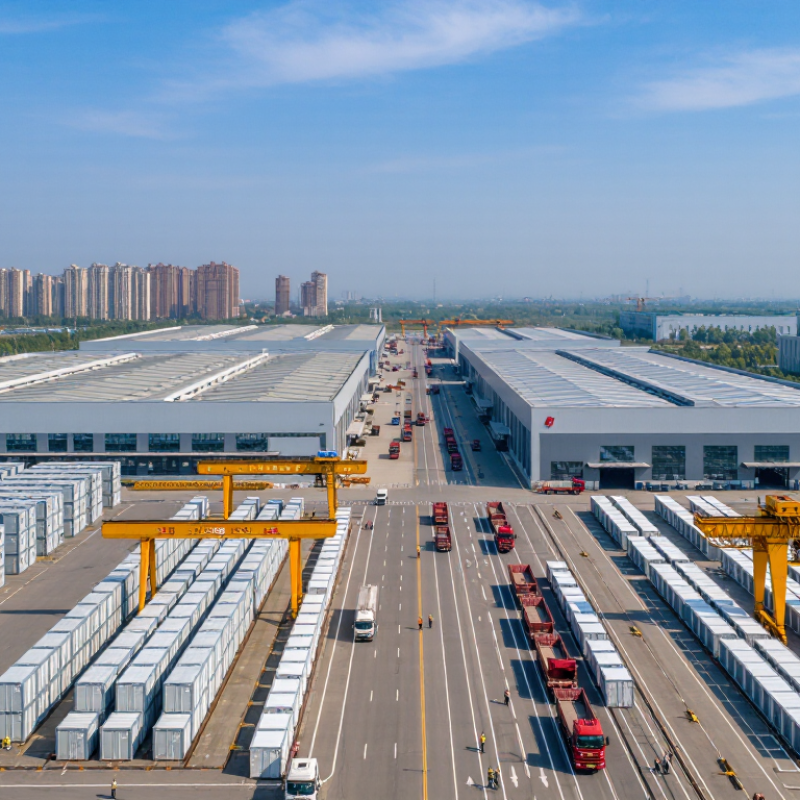
China’s prefabricated building manufacturing sector connects architectural design with factory production and onsite assembly. Plants produce components such as wall panels, floor slabs, beams, and volumetric modules. Materials vary by project, with concrete and steel commonly used. Digital models help teams coordinate dimensions, openings, and service routes before production begins.
Factory conditions can support repeatable checks, but quality is not automatic. One weak point in some project plans is assuming factory precision will solve every onsite problem. Transport limits, lifting access, component tolerances, and installation skills all affect the result. Buyers should compare a manufacturer’s production capacity with the project’s design, schedule, and local supply chain. Ask how changes are documented and how defects are handled. Details matter.
Tips: Request sample inspection records and a clear production schedule. Confirm who coordinates transport and onsite assembly. A neat factory tour is useful, but it cannot replace written quality procedures.
How the Top 10 Manufacturers Are Identified
How the Top 10 Manufacturers Are Identified
A credible ranking starts with clear, consistent criteria—not polished brochures. Manufacturers can be assessed by production capacity, engineering support, quality-control processes, and experience with comparable projects. Public project records and technical documents help verify claims. Factory visits or independent inspections add useful context when available.
Evidence matters. Review completed buildings for structural requirements, climate conditions, delivery timelines, and installation complexity. Compare material specifications and test records, then check whether the company can explain its quality checks in practical terms. Customer references may reveal how problems were handled, not just whether a project was delivered. No scoring model is perfect; project data can be incomplete, and a strong factory does not guarantee a smooth site installation. That deserves a second look.
Tips: Request recent project references and ask what changed during construction. Compare like with like: scope, materials, transport, installation, and after-sales support. Note unanswered questions, too. A low quoted price can hide missing services, while a large production line alone proves little. Look for specific evidence, not broad promises.
Profiles of 10 Leading Chinese Manufacturers
China’s prefabricated-building market covers steel frames, precast concrete, and factory-made modules. The Ministry of Housing and Urban-Rural Development reported 630 million square metres of newly started prefabricated buildings in 2022, about 26.2% of new construction that year. This figure signals scale, not guaranteed quality. Factory inspection and site records still matter.
The ten manufacturer profiles reflect distinct strengths. A steel-frame producer targets warehouses with long, clear spans. A precast-concrete specialist supplies staircases, beams, and wall panels. A light-gauge steel maker focuses on lighter residential structures. A volumetric-module producer delivers room-sized units. An integrated-panel manufacturer combines walls, insulation, and finishes. A site-office supplier prioritizes rapid installation. A rural-housing maker adapts layouts to local needs. A healthcare-focused producer plans for cleanable surfaces and service access. An industrial-building supplier coordinates structural and utility packages. An export-oriented manufacturer emphasizes packing, documentation, and shipment readiness. These are capability profiles, not verified rankings. A glossy sample can still hide inconsistent production.
Tips: Request recent project references, factory quality records, and installation details. Compare like with like: structural system, insulation, transport, and included finishes. Ask what happens when site dimensions differ. Small omissions can become costly.
Prefabricated Buildings in China: Share of New Construction
Annual share of newly started building floor area classified as prefabricated, 2019–2022.
The share rose from 13.4% in 2019 to 26.2% in 2022. Source: China Ministry of Housing and Urban-Rural Development annual industry statistics.
Comparison of Products, Capabilities, and Markets
A useful comparison of China’s leading prefabricated-building manufacturers starts with their product mix. Some specialize in steel-frame warehouses, while others supply modular rooms, container-based units, or concrete components. These systems serve different needs and should not be judged by the same checklist. A school assembled from volumetric modules has different transport and installation demands than a wide-span factory. Check what is included: structural frames, insulation, windows, interior finishes, and building services can vary. Factory capacity matters, but so does quality control. Ask how dimensions are checked, how components are protected during shipping, and whether sample inspection is possible. Details matter.
Capabilities shape delivery more than catalogue size. Compare design support, customization limits, production scheduling, and the ability to coordinate with local contractors. Request drawings and a clear scope before comparing quoted prices; a low initial figure may exclude foundations or installation. Market experience also matters. Manufacturers serving domestic projects may understand local workflows, while export-focused suppliers may be more familiar with overseas documentation and transport planning. Neither profile guarantees a better fit. Climate, site access, building codes, and the buyer’s own team all change the equation. A neat ranking can hide those differences. Some comparisons remain uncertain until specifications are aligned.
Industry Trends and Manufacturer Selection Factors
China’s prefabricated-building sector is evolving as developers seek faster delivery, consistent quality, and lower material waste. McKinsey’s 2019 report, Modular construction: From projects to products, estimates that modular methods can reduce project costs by up to 20% and shorten schedules by 20–50%. These are potential gains, not guarantees. Site access, design changes, and transport distances can quickly affect results. Meanwhile, the 2024 Global Status Report for Buildings and Construction from UNEP and the Global Alliance for Buildings and Construction reports that the sector accounted for 32% of global energy use and 34% of energy-related CO₂ emissions in 2023. That makes energy performance and material efficiency meaningful selection criteria.
When evaluating manufacturers, buyers should look beyond quoted price and production capacity. Ask how each factory checks welds, concrete curing, insulation, and dimensional tolerances; request inspection records and sample test reports. A neat factory floor helps, but documented quality control matters more. Review the supplier’s experience with the intended building type, local climate, and project scale. Confirm how modules will be packed, lifted, and assembled on site. A small mismatch at a connection can delay an entire installation. Also compare design flexibility, replacement-part availability, and the clarity of technical documentation. A cheaper offer may still cost more if drawings arrive late or site support is thin. These details deserve careful checking.