
Ramtech Building Systems is a leading provider of modular building systems including relocatable, permanent and prefabricated constructions.
T (817) 473-9376
Email: sale@viennavahouses.com
Ramtech Bulding Systems
1400 US Hwy 287 South Mansfield, TX 76063
Choosing Sofa Hotel furniture can shape how guests experience your property before check-in begins. A well-built sofa offers more than attractive upholstery. It supports waiting guests, separates lobby zones, and creates a comfortable place for quiet conversations. In a busy lobby, guests notice details quickly. Firm cushions, smooth stitching, and stable frames communicate care.
Hospitality furniture consultant Elena Marquez explains, “A hotel sofa must welcome guests beautifully, then survive the reality of daily use.” Her observation reflects practical experience across boutique hotels and high-traffic properties. Sofa Hotel products are often designed with commercial-grade foam, reinforced joints, stain-resistant fabrics, and replaceable components. These features can reduce maintenance pressure over time. They also help staff clean spills without disrupting the guest area.
Every hotel has different needs. A compact lounge may require modular sofas that fit narrow corridors and awkward corners. A luxury suite may need deeper seating, softer textures, and stronger visual presence. Fabric samples should be tested under real lighting. Measurements should be checked twice. Small mistakes become expensive later.
Still, Sofa Hotel furniture is not automatically the right choice for every project. A dramatic shape may reduce usable seating. A low price may hide weak internal construction. I have seen attractive sofas lose their comfort quickly when specifications were ignored. That is worth remembering.
The strongest decision balances design, durability, guest comfort, cleaning requirements, and long-term value. Good furniture should look inviting on opening day. It should still feel dependable years later.
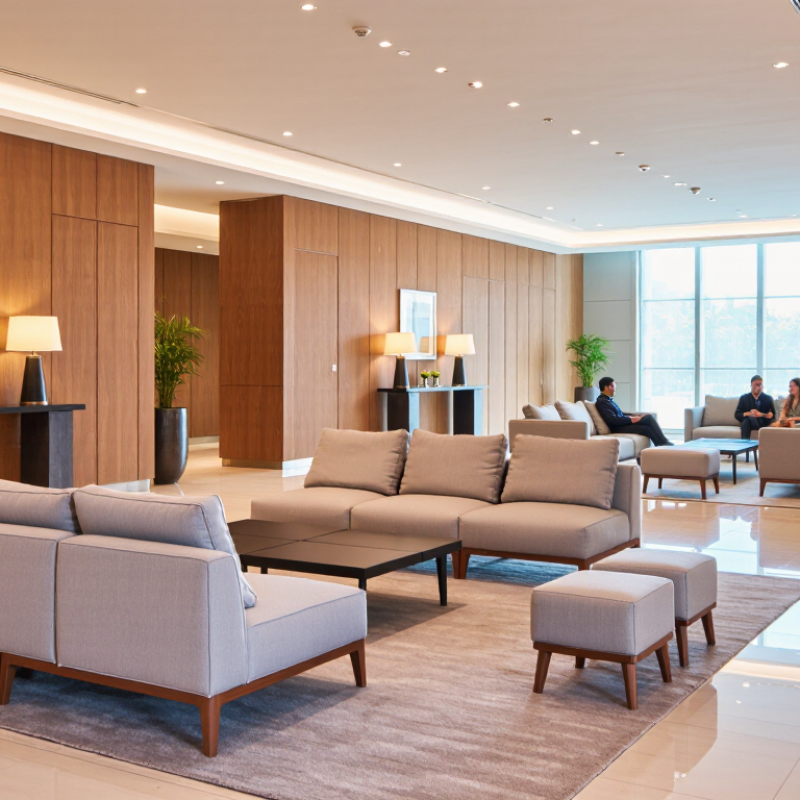
Why Choose Sofa Hotel Furniture for Your Hotel?
Hotel sofa furniture must handle more than occasional comfort. It supports guests in lobbies, suites, lounges, and meeting areas every day. Contract-grade seating is built for demanding commercial hospitality use. Its frame, joints, cushioning, and upholstery should withstand repeated sitting without losing shape quickly. A practical hotel sofa also needs stable dimensions. This helps designers maintain clear walkways and consistent room layouts.
Material selection matters. Performance upholstery can resist stains, abrasion, and frequent cleaning when properly specified. High-density foam often provides dependable support, while reinforced frames improve long-term stability. Look for documented testing, care instructions, and suitable fire-safety information for the installation region. These details make purchasing decisions more reliable. They also help maintenance teams avoid unsuitable cleaning products.
A good sofa feels welcoming, not institutional. Guests notice firm edges, loose cushions, rough fabric, and awkward seat depth. They notice quickly. Rounded arms may improve comfort, while raised legs can simplify floor cleaning. However, every design involves compromise. Softer foam may feel luxurious but lose resilience sooner. Tighter upholstery may look cleaner but offer less relaxed comfort. In real hotel projects, trial seating and sample cleaning often reveal problems that drawings miss. No sofa is perfect, so careful evaluation remains essential.
Hotel Sofa Furniture: Contract-Grade Seating for Commercial Hospitality Use
These typical planning ranges illustrate key sofa dimensions used in commercial hospitality furniture specifications. Contract-grade sofas are selected for consistent comfort, efficient space planning, easier maintenance, and long-term use in guest rooms, lobbies, lounges, and suites. Dimensions may vary by design, local accessibility requirements, and project standards.
Why Choose Sofa Hotel Furniture for Your Hotel?
Hotel seating faces repeated use: guests eat, work, wait, and sometimes sleep on sofas. A 50,000 double-rub rating is a practical commercial benchmark from ACT upholstery performance guidance. It measures repeated abrasion under controlled testing, not unlimited service life.
The number matters. Still, it is not the whole story. Fabric construction, seam quality, cushion compression, cleaning chemicals, and sunlight can affect performance. In a busy lobby, a sofa may receive hundreds of contacts daily. Industry occupancy data from STR shows that hotel demand remained strong across major markets in 2024, increasing pressure on shared furniture. A durable frame helps, too. Test the complete sofa, not only its fabric swatch.
Tips: Ask for the ACT test result, fabric composition, cleaning code, and warranty terms. Inspect stitching around corners and seat edges. Choose replaceable cushions when possible. Keep a maintenance log. Small repairs cost less than rushed replacement.
A 50,000 double-rub result can support a sound purchasing decision. It cannot predict every hotel environment. Some specifications need reconsideration after installation. For example, pale fabric may look refined but reveal marks quickly. Dark fabric may hide stains while showing lint. Practical experience should challenge the specification before purchase.
| Performance Dimension | Recognized Benchmark or Requirement | Recommended Hotel Sofa Target | Why It Matters in Hospitality |
|---|---|---|---|
| Upholstery abrasion resistance | The ACT performance guideline commonly identifies 50,000 Wyzenbeek double rubs as a heavy-duty commercial reference point for upholstery used in high-traffic applications. | At least 50,000 double rubs | Helps upholstery withstand repeated sitting, sliding, and daily guest use in lobbies, lounges, and guest rooms. |
| Abrasion-test interpretation | Double-rub results are laboratory indicators of abrasion resistance, not a guaranteed service-life calculation. Results should be compared only when the same test method is used. | Request the test method, result, and fabric construction before approval. | Prevents misleading comparisons and supports accurate material selection. |
| Colorfastness to light | Commercial upholstery should be evaluated using a recognized lightfastness test, with performance selected according to the amount of daylight exposure. | Use higher lightfastness performance for sofas near windows, glass façades, or atriums. | Reduces uneven fading and helps preserve a consistent interior appearance. |
| Flammability compliance | Commercial furniture must comply with the fire-safety requirements applicable to its installation location, occupancy type, and local building regulations. | Obtain current documentation for the complete furniture assembly, including fabric, filling, and barrier materials where applicable. | A compliant fabric alone does not necessarily certify the finished sofa. |
| Frame construction | Hardwood, engineered wood, and reinforced joint systems are commonly used in commercial seating. Performance depends on material grade, joinery, and load design. | Specify reinforced corner blocks, securely fastened joints, and documented structural testing where available. | A robust frame helps reduce loosening, creaking, and structural movement under frequent use. |
| Seat cushion resilience | High-resilience polyurethane foam is commonly specified for seating because it recovers its shape better than lower-resilience grades. Firmness and density should be selected together. | Use commercial-grade foam with documented density, firmness, and recovery characteristics appropriate to the seating design. | Supports comfort retention and helps limit premature sagging or permanent impressions. |
| Load-bearing capacity | A sofa’s safe load depends on its frame, suspension, legs, and test method; there is no single universal capacity for every design. | Specify a documented static or cyclic load rating suitable for the intended occupancy and seating configuration. | Clarifies suitability for single-seat, multi-seat, and public-area applications. |
| Cleaning and stain resistance | Cleaning instructions must be matched to the textile’s tested cleaning code and fiber construction. Stronger chemicals are not automatically safer or more effective. | Select upholstery with documented routine-cleaning procedures and obtain removable or replaceable covers where practical. | Makes housekeeping more consistent and can reduce replacement costs caused by permanent staining. |
| Maintenance and replacement | Durability depends on cleaning frequency, usage intensity, sunlight, moisture, vandalism risk, and maintenance quality—not abrasion testing alone. | Choose replaceable components, accessible fasteners, spare upholstery, and a documented maintenance schedule. | Extends usable life and allows targeted repairs instead of replacing the entire sofa. |
| Design and operational fit | Dimensions, seat height, arm width, leg clearance, and upholstery texture should match the intended room and cleaning workflow. | Balance comfort, cleanability, circulation space, and visual consistency. | A durable sofa performs best when it is comfortable, easy to clean, and correctly sized for the hotel environment. |
Note: The 50,000 double-rub figure is a commercial upholstery reference point. It should not be treated as a guaranteed number of days, guests, or years of service. Always verify the applicable test method, fire requirements, cleaning instructions, and local regulations for the finished sofa.
Why Choose Sofa Hotel Furniture for Your Hotel?
Hotel sofas face more than occasional use. Guests drop into seats with luggage, lean on armrests, and shift repeatedly during long waits. That is why structural reliability matters in busy lobbies, lounges, and guest areas. BIFMA X5.4 lounge seating tests can expose weaknesses through repeated loading. Reaching 100,000 cycles indicates serious endurance testing under controlled conditions.
The number matters. The method matters more. Reliable evaluation examines the frame, joints, seat support, and connection points. A professional testing team records movement, noise, loosened hardware, and visible damage. These details help hotel buyers compare products with greater confidence. In practical use, a sofa should remain stable when guests sit at different angles. It should also resist gradual loosening around heavily used armrests.
Real hotels are less predictable than laboratories. Guests may kneel on cushions or place bags on the backrest. No test can copy every habit. That limitation deserves attention. Ask for test documentation, material specifications, and maintenance guidance before purchasing. Review the results with your facilities team. A durable frame still needs correct installation and regular inspection. Small issues can become expensive when ignored. That is the part many purchasing plans miss.
Hotel-grade sofas are built for repeated use, not occasional living-room comfort. Their reinforced frames, high-resilience foam, and abrasion-resistant upholstery withstand luggage, uniforms, and daily guest traffic. HVS’s 2024 U.S. Hotel Development Cost Survey identifies furniture, fixtures, and equipment as a substantial hotel investment. That makes replacement timing a real operating concern.
A stronger sofa can reduce room closures, labor hours, and emergency purchasing. It also supports consistent guest presentation. The U.S. Environmental Protection Agency reported that furniture and furnishings generated about 12.1 million tons of municipal solid waste in 2018. Around 80% reached landfills. Extending sofa life can therefore reduce both disposal pressure and procurement waste.
Details matter. Replaceable covers, accessible components, and commercial-grade stitching make repairs more practical. A loose seam should not require replacing an entire sofa. The calculation is not perfect. A heavier frame may increase shipping and installation costs. Poor cleaning practices can still damage durable upholstery. Hotel teams should record stains, frame movement, fabric wear, and repair time during inspections. These records create better replacement decisions than appearance alone. A well-chosen sofa may cost more initially, but its lifecycle value appears through fewer disruptions, fewer maintenance calls, and longer service intervals.
A hotel sofa does more than fill an empty corner. It shapes how guests move, wait, talk, and rest. In guest lounges, comfortable sofas can reduce perceived waiting time near reception. A seat depth of about 55–60 centimeters often supports relaxed sitting without blocking walkways. Firm cushions may help guests stand easily, especially older travelers. Softness alone is not enough.
Softness alone is not enough.
Layout affects capacity and privacy. A straight sofa can serve families, while two smaller sofas create clearer conversation zones. Keep main paths open, preferably around 90 centimeters wide. Measure doors, lifts, and turning spaces before ordering.
I once saw a beautiful sofa placed too close to a coffee table. Guests had to twist sideways. The room looked elegant, but it worked poorly. That mistake remains worth remembering.
Tips: Test sofas with different body types before purchase. Sit for ten minutes, not ten seconds. Check fabric cleaning instructions and seam strength. Leave space for luggage beside seating, not across walking routes. Review the plan during busy hours, when quiet measurements become less useful. A flexible layout may hold fewer seats, but it can support smoother service and a calmer guest experience.