Why Choose a Hinged Shower Door for Your Bathroom?
A shower door affects more than the look of a bathroom. It shapes how easily you enter, how water stays inside, and how much room you need nearby. A Hinged Shower Door opens on side-mounted hinges, much like a regular door. That familiar movement can feel comfortable and simple. It can also require clear floor space for the door’s swing. In a compact bathroom, that detail matters.
This guide explores why homeowners consider hinged designs, and what to check before choosing one. We’ll look at access, glass options, hardware, cleaning, and installation needs. The right choice depends on the room, not just a product photo. Measure the opening and nearby fixtures, including towel bars and vanities. Check that the floor is level and the walls can support the specified hardware. Small details count.
There are trade-offs. Hinges and seals need occasional attention, and water may escape if the door is poorly aligned or the shower spray points toward the opening. No design is perfect. A hinged door may suit a spacious shower, yet feel awkward beside a toilet or narrow walkway. Manufacturer instructions and advice from a qualified installer can help confirm compatibility. This overview offers practical considerations, not a substitute for checking the actual bathroom. It’s easy to overlook one measurement. That can change everything.
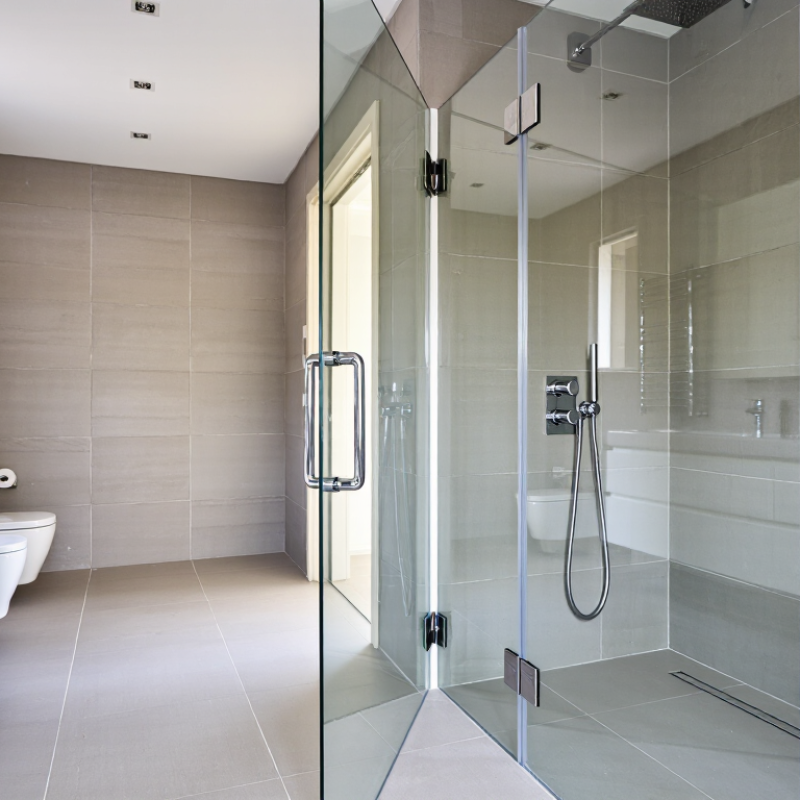
How a Hinged Shower Door Works
Why Choose a Hinged Shower Door for Your Bathroom?
A hinged shower door swings on hinges fixed to a wall or a stationary glass panel. When the handle moves, the hinges carry the door’s weight and guide its rotation. Most doors open outward, while some models also open inward if the bathroom layout allows it. The opening path must remain clear of toilets, cabinets, and towel bars.
A proper installation begins with a strong, accurately plumb wall. The hinges connect through reinforced fittings, usually with seals or protective gaskets between metal and glass. These parts reduce stress and help prevent water from escaping around the hinge area. Tempered safety glass is commonly used because it is designed to break into smaller pieces if damaged. It still needs careful handling.
The bottom sweep directs water toward the shower base or threshold. Side seals close the narrow gaps along the frame or wall. They do not create a completely waterproof barrier. Splash control also depends on the showerhead position and the user’s habits.
A slightly uneven wall can make the door drag, leave a gap, or close poorly. Small alignment errors matter. Checking the floor slope, hinge tension, and clearance after installation is practical, not optional. Some bathrooms need a wider fixed panel to limit splashing, although that can reduce the entry space. The best choice is not always the most attractive one.
Bathroom Layouts That Suit Hinged Doors
Hinged shower doors work well in layouts with clear floor space beside the shower. A recessed alcove is a natural fit: the walls enclose three sides, leaving one opening for the door. In a corner shower, a fixed glass panel can pair with a hinged door to create a defined entry. The door needs room to swing without striking a vanity, toilet, towel rail, or person passing nearby.
Measure the full swing path, not just the shower opening. A strip of painter’s tape on the floor can help you picture the door’s arc before installation. Check whether the chosen model opens inward, outward, or both ways, and follow its installation guidance. This detail matters in compact bathrooms, where a few inches can change how easily someone enters or exits. Tight clearance? Consider another door style.
Larger bathrooms often make hinged doors feel especially comfortable because the entry can stay wide and unobstructed. They also suit layouts where the shower sits away from busy walkways. Still, a roomy plan can be misleading. A door that clears the sink when closed may bump it when fully open. Check the handle position, nearby fixtures, and daily walking route. The best fit is the one that works during a rushed morning, not only on a floor plan.
Why Choose a Hinged Shower Door? Bathroom Layouts That Suit Hinged Doors
A hinged door works best when the bathroom has enough unobstructed floor space for the door to swing outward. As a simple planning estimate, allow a clear zone about as deep as the door leaf is wide; confirm the required clearance with the door manufacturer and your bathroom layout.
Benefits for Access, Cleaning, and Appearance
A hinged shower door creates a wide opening, which can make stepping in and out easier than squeezing past a sliding panel. The clear access is especially useful when carrying towels or helping a child, but the swing needs room. Measure the space beside the shower, including nearby vanities and towel bars, before choosing a door. A door that bumps into a fixture gets annoying fast. Check that the floor and walls are reasonably level, too; poor alignment can leave uneven gaps or make the door rub.
Cleaning is straightforward in some ways. There is no long bottom track where soap film and hair can collect, and both glass surfaces are usually reachable when the door opens. A daily squeegee helps reduce water spots, while a soft cloth can dry the hinges and seals. Small detail, big difference. Hinges still need occasional attention, and seals can gather grime, so this is not a maintenance-free option. Visually, a hinged panel often feels open and uncluttered, especially with clear glass and simple hardware. Yet the hardware remains visible, and fingerprints show on glass. Consider the room’s actual light and cleaning habits, not just a showroom’s shine.
Factors to Consider Before Choosing One
Why Choose a Hinged Shower Door for Your Bathroom?
A hinged shower door can make a bathroom feel open and easier to use. It swings outward, so there is no bottom track collecting soap residue. However, the door needs enough clearance. Measure the opening, nearby vanity, toilet, and towel rail before ordering. The 2024 U.S. Houzz Bathroom Trends Study reports that showers remain a major focus in bathroom renovations, especially through larger layouts and upgraded fittings. That trend does not mean every room needs a wide glass enclosure.
Before choosing one, check wall strength and hinge placement. A heavy glass panel needs solid support, accurate drilling, and professional installation. The National Kitchen and Bath Association recommends planning comfortable clearances around fixtures, but real bathrooms are rarely perfect. A door may look elegant in a showroom and hit the toilet at home. I would also consider daily ventilation. The U.S. Environmental Protection Agency advises using effective bathroom ventilation to control moisture, which helps protect seals, grout, and surrounding walls.
Tips: Leave practical swing space, not just visual space. Use tempered safety glass that meets local standards. A 6 mm panel may feel lighter, while thicker glass can provide greater stability. Ask the installer how the hinges, seals, and wall anchors are tested. Small details matter. I once underestimated towel placement; the door opened neatly, but the towel became inconvenient every morning. Also, review cleaning habits honestly. Frameless glass looks refined, yet water spots will be visible without regular wiping.