
Top 10 Fireproof Insulation Materials for Global Buyers

Choosing the right Fireproof Insulation requires more than comparing product prices or temperature ratings. Global buyers must examine material composition, fire-test results, installation conditions, and long-term performance. A ceramic fiber blanket may protect a furnace wall, while mineral wool can suit external building assemblies. Calcium silicate boards offer rigidity, but they may require careful handling during cutting and fitting.

Performance depends on the application. A high-temperature pipe room, commercial façade, ship compartment, and industrial kiln face different risks. Buyers should review flame spread, smoke development, thermal conductivity, moisture resistance, and service temperature. Independent laboratory reports provide stronger evidence than unsupported marketing claims. Certification should also match the destination market and the intended construction system.

Details matter. A poorly sealed joint can let heat pass through an otherwise excellent barrier. Wet insulation may lose efficiency. Compressed batts may create gaps around steel framing. These small failures often appear during installation, not during showroom demonstrations. This guide compares ten widely used materials through practical criteria, including safety, durability, handling, availability, and lifecycle value. It considers products such as mineral wool, fiberglass, ceramic fiber, perlite, vermiculite, and calcium silicate.

No material is perfect. That deserves attention. Some options resist extreme heat but need protective surfaces. Others install easily but perform poorly under severe exposure. Buyers should confirm local building requirements, obtain current technical data, and consult qualified fire-safety professionals before specifying a system. The final choice should reflect verified testing, realistic site conditions, and responsible installation—not a single impressive number.
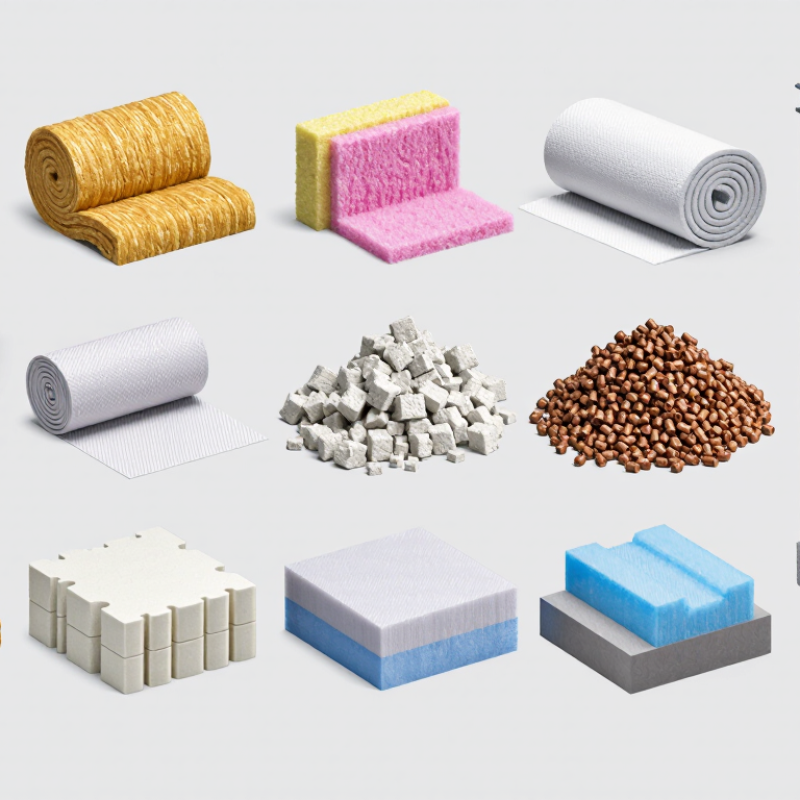
Top 10 Fireproof Insulation Materials for Global Buyers

What Makes Insulation Fireproof: Key Ratings, Tests, and Performance Factors

“Fireproof” insulation is not automatically fireproof in every building condition. It usually means limited combustibility, low flame spread, or a tested resistance period. The 2023 National Fire Protection Association fire-loss report recorded about 1.5 million fires in the United States, with property damage near $18.1 billion. These figures explain why insulation ratings deserve careful attention.

Testing methods measure different risks. ASTM E136 evaluates whether a material remains noncombustible under high heat. ASTM E84 measures flame spread and smoke development across a surface. In Europe, EN 13501-1 classifies products from A1 to F, while ISO 1182 supports noncombustibility assessment. A high rating helps, but it does not guarantee a complete wall assembly will resist fire for the same duration. That distinction is often missed.

Thickness, density, moisture, facings, joints, and installation quality can change performance. Mineral-based insulation may remain stable near extreme temperatures, while some polymeric products need protective layers. However, every product has weak points. Gaps around pipes can act like small chimneys. Compressed sections may reduce thermal protection. Fire resistance tests, such as ASTM E119 or EN 1363-1, evaluate assemblies rather than loose insulation alone. Global buyers should request test reports, application limits, aging data, and certification scope. Laboratory results are valuable, but real projects remain less tidy.

The Top 10 Fireproof Insulation Materials and Their Core Properties

Selecting fireproof insulation requires more than checking a flame rating. Mineral wool offers non-combustibility, sound control, and stable performance at high temperatures. Glass wool is lightweight and flexible, but it needs careful installation around joints. Calcium silicate provides rigid protection for pipes and equipment. Perlite board resists heat and moisture while remaining relatively light. Vermiculite board adds low density and useful dimensional stability.

Cellular glass combines closed-cell structure with water resistance and strong compressive performance. Aerogel blankets provide exceptional thermal resistance in thin spaces, although their cost can limit large projects. Ceramic fiber handles extreme temperatures, but installers must control dust exposure. Expanded clay aggregate works well as loose-fill insulation in floors and roof systems. Fire-rated gypsum board slows heat transfer and protects framed assemblies, though it is not a replacement for complete fire design. Performance can change with facings, binders, moisture, and installation quality.

Tips: Request tested fire, thermal, and moisture data for the exact product assembly. Check local codes, thickness requirements, and service temperatures before purchasing. A material that performs well in a laboratory may disappoint when joints are open or compression is uneven. Ask suppliers for technical datasheets, independent test reports, and batch consistency records. My practical view is simple: price matters, but verified performance matters more.

Comparing Thermal, Acoustic, Moisture, and Fire Resistance

Top 10 fireproof insulation materials differ sharply in real-world performance. Mineral wool and glass wool offer strong fire resistance, good thermal control, and useful sound absorption. Calcium silicate handles high temperatures well, but it can be brittle during installation. Perlite and vermiculite are lightweight mineral options with dependable fire performance. Cellular glass resists moisture almost completely, making it suitable for damp roofs and below-grade areas.

Aerogel provides excellent thermal resistance in thin sections, although its cost remains high. Phenolic foam reduces heat transfer and may perform well acoustically, but moisture detailing requires care. PIR insulation offers strong thermal efficiency, yet buyers must verify its tested fire assembly. Ceramic fiber tolerates extreme heat, though it may not suit occupied spaces without proper containment. Fire-rated mineral boards provide rigidity, acoustic benefits, and stable protection around service shafts.

Tips: Compare complete wall or roof assemblies, not isolated samples. Check fire ratings, smoke performance, water absorption, density, and acoustic test data. Ask for independent laboratory reports and installation guidance. Local climate matters. A material that performs well in a dry warehouse may fail when joints absorb water. Thermal values can also change after aging, compression, or repeated wetting.

In practice, the “best” choice is rarely universal. I have seen thin insulation save space but create difficult acoustic weaknesses. Installation quality often decides the result. Review thermal conductivity, sound transmission, moisture exposure, and fire duration together. Confirm compliance with the destination market’s current building standards. Be cautious with impressive datasheets; field conditions are less tidy.

Top 10 Fireproof Insulation Materials for Global Buyers - Comparing Thermal, Acoustic, Moisture, and Fire Resistance

Rank Insulation Material Typical Thermal Conductivity
(λ, W/m·K)
Approx. R-Value per 25 mm
(m²·K/W)
Acoustic Performance
(Indicative NRC)
Moisture Resistance Typical Fire Classification Approx. Maximum Service Temperature Main Advantages Key Limitations
1 Mineral Wool 0.034–0.045 0.56–0.74 0.70–1.00
at approximately 50–100 mm
High
Non-hygroscopic; vapor-open, but can absorb liquid water if exposed
Usually A1 or A2-s1,d0
Unfaced products; facing and binder may change the classification
Approximately 650–1,000°C, depending on fiber type and product design Excellent fire resistance, strong sound absorption, good dimensional stability, and broad availability Heavier than foam products; performance can decline when compressed or left exposed to water
2 Fiberglass / Glass Mineral Wool 0.032–0.044 0.57–0.78 0.60–1.00
at approximately 50–100 mm
Medium to High
Fibers do not readily absorb water, but wetting reduces thermal performance
Often A1 or A2-s1,d0
Verify the complete faced or unfaced assembly
Approximately 450–540°C for common building products Low cost, lightweight, good thermal efficiency, and very good airborne sound absorption Can lose loft if compressed; fibers require suitable handling and protective coverings
3 Cellular Glass 0.038–0.050 0.50–0.66 0.15–0.35 Very High
Closed-cell, water-resistant, and generally vapor-tight
Usually A1
Non-combustible inorganic glass material
Approximately 430°C for many building insulation grades; higher-temperature grades also exist Zero water absorption in properly sealed systems, high compressive strength, and excellent vapor resistance Relatively heavy, rigid, brittle, and usually more expensive than fibrous insulation
4 Calcium Silicate 0.050–0.090 0.28–0.50 0.15–0.35 Medium to High
Porous and moisture-tolerant, but may absorb water and require drying
Usually A1 Approximately 650–1,000°C, depending on formulation and density Excellent high-temperature stability, non-combustibility, and good resistance to mechanical damage Lower thermal efficiency per thickness than foam or aerogel; rigid and relatively heavy
5 Perlite Board or Pipe Insulation 0.045–0.065 0.38–0.56 0.30–0.60 Medium
Porous; water-repellent treatments and weatherproof jacketing may be required
Usually A1
For mineral-based, unfaced products
Approximately 650–1,000°C, depending on binder and product type Non-combustible, lightweight compared with many refractory boards, and suitable for high-temperature applications Can be fragile; moisture exposure may increase weight and reduce thermal performance
6 Vermiculite Insulation 0.060–0.100 0.25–0.42 0.25–0.55 Medium
Mineral and non-rotting, but porous and capable of holding moisture
Usually A1
For suitable expanded mineral products without combustible additives
Approximately 900–1,100°C, depending on grade and binder Non-combustible, lightweight, chemically stable, and useful in fire-resistant boards and loose-fill systems Lower thermal performance than modern high-efficiency insulation; can settle or become friable
7 Ceramic Fiber 0.050–0.120
Temperature-dependent
0.21–0.50 0.30–0.70 High
Inorganic and generally water-resistant; binders and facings may vary
Typically A1 Approximately 1,000–1,430°C, depending on fiber composition and grade Exceptional high-temperature capability, low thermal mass, and strong resistance to thermal shock Not generally intended for standard occupied-building wall insulation; requires careful handling and containment
8 Polyisocyanurate (PIR) Foam 0.022–0.028 0.89–1.14 0.10–0.25 High
Closed-cell structure provides low water absorption when joints and facings are protected
Often Euroclass B-s1,d0 or similar
Classification varies by facing, thickness, density, and assembly
Approximately 120–150°C for many building products Very high thermal resistance per thickness, low weight, and good dimensional efficiency Combustible polymer core; fire performance depends strongly on facings, joints, installation, and tested assembly
9 Phenolic Foam 0.018–0.023 1.09–1.39 0.10–0.25 High
Closed-cell construction usually gives low water absorption
Often Euroclass B-s1,d0 or similar
Exact result depends on product facing and installation system
Approximately 120–150°C for common building insulation products Among the lowest thermal conductivities of rigid foam boards and efficient where space is limited Combustible polymer material; may be brittle and requires careful detailing at joints and penetrations
10 Silica Aerogel Blanket 0.013–0.020 1.25–1.92 0.20–0.50 High
Hydrophobic grades resist liquid water, but seams and outer coverings still require protection
Commonly A2-s1,d0 for some reinforced blanket systems
Confirm the classification of the complete product
Approximately 650–1,000°C, depending on reinforcement and formulation Outstanding thermal efficiency at very small thickness, lightweight construction, and good flexibility High purchase cost, lower resistance to compression than rigid boards, and potentially dusty installation

Technical note: Values are typical indicative ranges for commonly available products, not universal specifications. Thermal conductivity changes with temperature, density, moisture content, aging, and thickness. Acoustic ratings depend heavily on thickness, facing, air gaps, mounting method, and the complete wall or ceiling assembly. Fire classifications must be verified against the applicable local standard and the exact tested product assembly; no insulation material should be treated as universally “fireproof.”

Selecting Materials for Different Buildings, Climates, and Applications

Top 10 Fireproof Insulation Materials for Global Buyers

Selecting Materials for Different Buildings, Climates, and Applications

Choosing fireproof insulation depends on more than a material’s fire rating. Mineral wool suits apartment walls, steel frames, and humid coastal buildings when properly protected from water. Fiberglass is lightweight and economical, but it needs careful facing and sealing. Calcium silicate works well around boilers, chimneys, and high-temperature equipment. Perlite and vermiculite boards offer low density for walls and ceilings. Cellular glass resists moisture, chemicals, and fire, making it useful below grade. Aerogel provides strong insulation in thin spaces, although its cost can limit large projects.

Expanded clay aggregates fit roofs, floors, and cavity fills in warm or cold climates. Fire-resistant gypsum boards support interior partitions, but they are not complete insulation systems alone. Ceramic fiber handles extreme industrial temperatures, yet installers need suitable protection and controlled handling. Foamed glass and mineral-based panels can serve cold storage or façade applications when joints are tightly detailed.

Climate changes the decision. In wet regions, water absorption and drying time deserve equal attention. In cold zones, continuous insulation reduces thermal bridges around concrete and steel. For hot climates, roof heat gain may matter more than wall thickness. Check tested assemblies, not only product data sheets. Compare classifications under applicable regional standards, such as EN 13501-1 or ASTM methods. Ratings are not always directly interchangeable. Site inspections often find gaps around pipes, anchors, and window frames. Those small gaps can undermine excellent materials. A thinner solution may look efficient, but installation errors can make it a poor choice.

Global Buying Criteria: Standards, Certifications, Costs, and Supply Chains

Global buyers should treat “fireproof” as a performance claim, not a material category. Mineral wool, cellular glass, calcium silicate, perlite, vermiculite, aerogel, ceramic fiber, gypsum, foam glass, and refractory boards need different testing pathways. ISO 1182 measures non-combustibility, while EN 13501-1 classifies reaction to fire. ASTM E84 measures surface burning, but it does not prove a complete wall’s fire resistance. Test the assembly.

The 2023 UNEP Global Status Report states that buildings consumed about 34% of global energy and produced roughly 37% of energy-related emissions. Insulation buyers therefore need both fire performance and thermal data. Request declared conductivity, density, moisture resistance, service temperature, and fire-rating duration. ASTM E119 or EN 1364 results are more useful when they match the proposed wall, roof, or pipe system. Certificates should identify the factory, production batch, test laboratory, and validity period. Not just the board.

Pricing requires wider attention. Compare cost per protected square metre, not cost per package. Freight volume matters because rigid boards can fill containers quickly. The World Bank’s 2023 Logistics Performance Index shows continuing differences in customs, infrastructure, and shipment reliability across markets. Ask suppliers for lead times, minimum order quantities, backup plants, and packaging details. A low quote may exclude testing, duties, or damaged-edge allowances. I have seen spreadsheets look precise while ignoring site waste. That weakness deserves review.

TOP