How to Choose the Best Stainless Steel Coil Manufacturer?
Choosing the right Stainless Steel Coil Manufacturer requires more than comparing prices on a spreadsheet. A bright coil may look flawless under warehouse lighting, yet hide inconsistent thickness, poor edge control, or uncertain material records. Buyers should examine production experience, technical capability, quality systems, and delivery performance together. The cheapest offer can become expensive after slitting, forming, or rejected batches.
Metallurgist Michael F. McGuire states, “Stainless steels are iron-base alloys containing a minimum of approximately 11% chromium.” This basic fact highlights why chemical accuracy matters. A dependable manufacturer should provide complete mill test certificates, heat numbers, grade verification, and traceability from melting to shipment. Ask whether the supplier produces 304, 316L, 430, or other required grades consistently. Confirm thickness tolerance, coil width, surface finish, yield strength, and maximum coil weight. Details matter.
Visit the facility if possible. Inspect annealing lines, pickling equipment, leveling systems, packaging, and laboratory controls. Request evidence of testing rather than accepting polished promises. ISO certification can support credibility, but it does not replace practical performance data. Speak with recent customers about claims, response times, and shipment accuracy.
No checklist is perfect. That deserves reflection. A manufacturer may meet specifications yet communicate poorly during urgent changes. Another may offer excellent service but lack capacity for long-term volume. The best choice balances verified quality, transparent documentation, production stability, responsive engineering support, and realistic lead times. Strong partnerships are built coil by coil, not by marketing language alone.
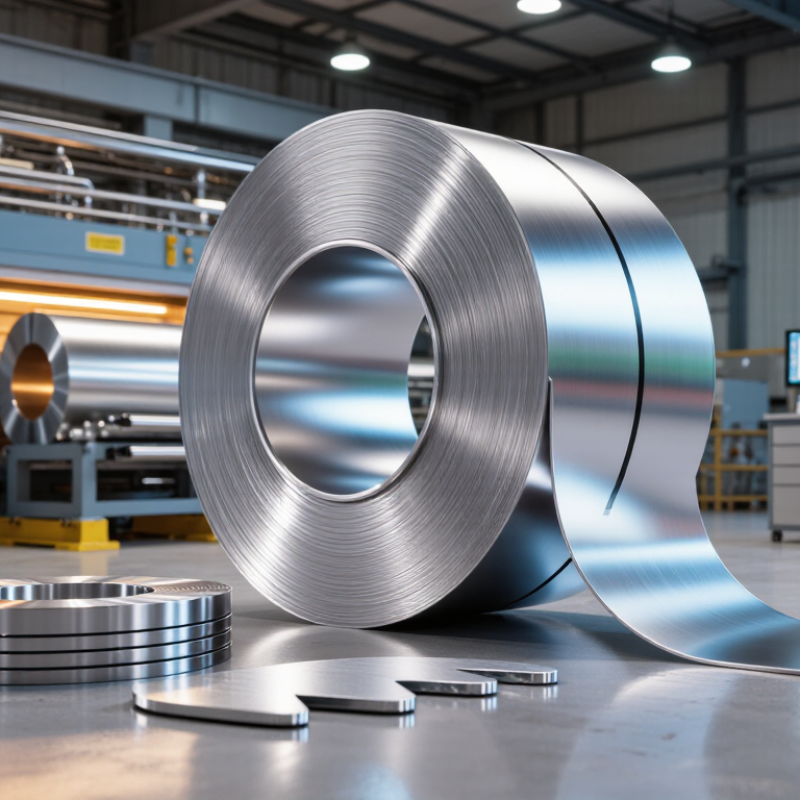
Defining Your Stainless Steel Coil Requirements
Defining your stainless steel coil requirements is the practical starting point for choosing a reliable manufacturer. Identify the required grade, thickness, width, coil weight, and surface finish before requesting quotations. These details influence production methods, pricing, and delivery schedules. A vague specification often creates expensive adjustments later.
Consider the coil’s working environment. Food-processing equipment may require smooth, easy-to-clean surfaces, while chemical applications demand stronger corrosion resistance. State the forming method, welding process, operating temperature, and expected service life. Include acceptable thickness and width tolerances. Small differences can affect stamping accuracy and installation.
Ask for mill test certificates, chemical analysis, mechanical results, and inspection records. An experienced manufacturer should explain how these documents support your quality requirements. Packaging also deserves attention. Edge protection, moisture barriers, and secure coil strapping reduce damage during transport. Do not overlook inner diameter and maximum coil weight; handling equipment may limit both. It sounds basic.
I have seen buyers focus heavily on price and discover that the selected finish was unsuitable for fabrication. That mistake is avoidable, though not every requirement is obvious at the beginning. Discuss samples, trial coils, and inspection points openly. A clear requirement sheet gives manufacturers fewer assumptions and gives you stronger evidence for comparing capability, consistency, and reliability.
Evaluating Manufacturer Quality and Production Capabilities
How to Choose the Best Stainless Steel Coil Manufacturer?
Evaluating Manufacturer Quality and Production Capabilities
A reliable stainless steel coil manufacturer should prove quality through records, not promises. Request mill certificates showing grade, chemical composition, heat number, and mechanical test results. Compare these documents with independent laboratory reports when the application carries serious performance demands. Ask for evidence.
Inspect how the factory controls thickness, width, edge condition, surface finish, and coil weight. During a site visit, observe slitting lines, annealing furnaces, polishing equipment, and storage areas. Clean floors and protected coils suggest discipline, although appearance alone cannot confirm technical ability. Numbers can mislead.
Production capability also depends on consistency. Ask how the manufacturer manages incoming materials, calibration, nonconforming coils, and final inspections. A strong supplier should explain its traceability system from raw material receipt to shipment. Check whether it can maintain narrow tolerances across repeated orders, not only produce one impressive sample. Lead times should match real capacity, equipment availability, and maintenance schedules.
Useful questions reveal more than sales presentations. Can the factory supply small trial batches? Can its engineers recommend a suitable grade for forming, welding, or corrosion exposure? Are inspection reports issued before dispatch? I have learned that an organized answer matters, but it is not enough. Manufacturing problems sometimes appear after long production runs, especially when specifications are unclear. Leave room for correction, and record every agreed tolerance in writing.
Checking Certifications, Testing, and Quality Control Systems
Choosing a stainless steel coil manufacturer requires more than comparing prices. Certification records reveal how consistently a supplier controls its work. The ISO Survey 2022 recorded 1,265,216 ISO 9001 certificates worldwide, but certification alone proves little. Ask for the current certificate, scope, issuing body, and audit status. The scope should cover coil production, not only office procedures.
Testing must match the grade and end use. Request heat numbers, chemical analysis, tensile results, hardness data, thickness tolerances, and surface inspection records. ASTM or EN references should appear on test reports. For laboratory credibility, check whether testing follows ISO/IEC 17025 principles. EN 10204 type 3.1 inspection documents can also link results to a specific production heat. Traceability matters.
Look closely at the quality control system. Can the manufacturer trace a coil from melting to slitting, packing, and shipment? The International Stainless Steel Forum reported 58.4 million tonnes of stainless crude steel production in 2023. At that scale, small control failures can affect many customers. Ask how instruments are calibrated and how nonconforming coils are quarantined. Real factories should provide examples, not polished promises.
Do not accept perfect paperwork too quickly. I would sample records, inspect coil edges, and compare actual thickness with the certificate. A supplier may hold ISO certificates yet miss a customer’s flatness requirement. That uncomfortable gap deserves attention. Audits, independent tests, and retained samples provide stronger evidence than logos on a website.
How to Choose the Best Stainless Steel Coil Manufacturer?
Checking Certifications, Testing, and Quality Control Systems
Compare the supplier’s mill test certificates with the applicable ASTM A240/A240M requirements. Tensile strength and yield strength should be supported by documented mechanical testing, material traceability, chemical analysis, dimensional inspection, and surface-quality records.
Values shown are minimum mechanical requirements in MPa for commonly specified stainless steel grades under ASTM A240/A240M. Requirements may vary by product condition and applicable standard edition. Also verify an active ISO 9001 quality-management system and supplier-specific testing records.
Comparing Pricing, Lead Times, and Supply Reliability
Choosing a stainless steel coil manufacturer requires more than comparing the lowest quotation. In 2023, the International Stainless Steel Forum reported global stainless crude steel production of about 58.4 million tonnes. This scale can support competitive pricing, but it also exposes buyers to volatile nickel, energy, and freight costs. The World Bank’s Commodity Markets Outlook recorded a sharp decline in nickel prices during 2023, yet regional premiums remained uneven. Ask whether each quote includes alloy surcharges, slitting, packaging, inspection, and delivery.
Lead time deserves equal attention. A supplier promising seven days may only mean production time, excluding testing and port handling. Request a written schedule with milestones for material allocation, rolling, surface inspection, and dispatch. S&P Global PMI reports have repeatedly shown that transport disruptions can lengthen supplier delivery times, even when factory demand weakens. That matters. A realistic 21-day promise is often safer than an attractive, vague estimate.
Supply reliability is easier to judge through evidence. Review at least twelve months of on-time delivery records, mill test certificates, complaint responses, and backup production capacity. Check whether the manufacturer can maintain thickness tolerance and surface finish across repeat orders. I would also request two recent customer references, while protecting confidential information. A perfect record sounds suspicious. Even strong manufacturers experience delays, and honest explanations reveal more than polished sales language. Price is not everything. A useful comparison table should show total delivered cost, confirmed lead time, safety-stock needs, and the financial effect of one missed shipment.
How to Choose the Best Stainless Steel Coil Manufacturer? - Comparing Pricing, Lead Times, and Supply Reliability
| Supplier Profile | Typical Product Scope | Indicative Price Range
(USD/metric ton) | Standard Lead Time | Minimum Order Quantity | Supply Reliability Indicators | Quality & Documentation | Best Fit |
| Large integrated mill | 304/304L and 316/316L hot-rolled or cold-rolled coils; broad thickness and width capability | 2,100–3,200 | 8–16 weeks | Usually 20–50 metric tons | High
Multiple production lines, formal allocation procedures, and established export logistics | Mill test certificate, heat number traceability, chemical analysis, mechanical test data, and dimensional inspection reports | Large recurring programs, automotive, energy, construction, and projects requiring strict traceability |
| Mid-sized service center | Common grades in standard gauges; slit, cut-to-length, polished, or surface-finished material | 2,250–3,450 | 2–8 weeks from stock;
6–12 weeks for replenishment | Typically 5–20 metric tons | Medium to high
Fast access to stocked material, but availability depends on inventory turnover | Mill certificates, third-party inspection options, packing records, and basic dimensional reports | Buyers needing shorter delivery times, smaller lots, and value-added processing |
| Specialty finishing processor | Decorative or precision-finished coils, including brushed, mirror, embossed, and tight-tolerance products | 2,800–4,800 | 6–14 weeks | Usually 3–15 metric tons | Medium
Strong process control, but specialist capacity can be limited during peak periods | Surface roughness data, finish samples, inspection reports, and grade-specific mill documentation | Architectural, appliance, elevator, food-service, and appearance-critical applications |
| Regional distributor | Fast-moving 304 and 316 products in commercially common sizes and finishes | 2,400–3,700 | 2–10 business days from local stock;
4–10 weeks for backorders | Usually 1–5 metric tons | Medium
Quick local fulfillment, but limited control over upstream mill scheduling | Mill certificates and packing lists are generally available; confirm heat traceability before ordering | Urgent maintenance, prototypes, replacement material, and low-volume purchasing |
| Low-cost import trader | Standard grades and finishes sourced from one or more external mills | 1,850–2,900 | 10–18 weeks including ocean freight and customs clearance | Commonly 20–100 metric tons | Variable
Performance depends on mill selection, export controls, freight capacity, and documentation accuracy | Request original mill certificates, heat numbers, independent inspection, and clear claims procedures | Price-sensitive buyers with flexible schedules and strong incoming inspection capability |
Note: Price ranges are indicative market benchmarks for common stainless steel coil grades and may vary with nickel and alloy surcharges, thickness, width, surface finish, order volume, exchange rates, freight, duties, and payment terms. Lead times are planning ranges rather than guaranteed commitments. Before placing an order, verify current quotations, production capacity, certificates, inspection requirements, and on-time delivery performance.