How to Choose Prefabricated Building Solutions for Your Projects?
Choosing prefabricated building solutions can transform your construction projects. Prefabricated buildings offer efficiency, cost-effectiveness, and speed. However, not all solutions fit every project. Careful consideration is crucial.
Deciding on the right prefabricated building requires understanding your specific needs. Do you prioritize sustainability, design, or time efficiency? Each factor can influence the type of prefabricated structure you select. An in-depth analysis of your project's goals will lead to better outcomes.
Keep in mind that while prefabricated buildings can reduce costs, quality varies widely. Research suppliers meticulously. Look for proven experience and a solid reputation in the industry. Selecting a reliable partner is essential to ensure durability and functionality in your prefabricated building solution. A careful approach can help you avoid pitfalls and reflect on the long-term impacts of your choices.
Understanding Prefabricated Building Solutions
Prefabricated building solutions are revolutionizing construction. These systems offer numerous advantages, including speed, cost-effectiveness, and sustainability. A report by McKinsey indicates that prefabricated methods can reduce construction time by up to 50%. This shift is appealing to projects seeking efficiency and budget control.
Understanding prefabricated solutions starts with recognizing their types. Modular units, panelized systems, and manufactured homes differ in design and function. Each type is suitable for various projects, from residential buildings to commercial spaces. A study by the National Institute of Standards and Technology shows that prefabrication can improve construction quality by reducing on-site errors.
However, challenges exist. Not all projects benefit equally from prefabrication. Some designs may encounter limitations in flexibility and customization. Additionally, there is a need for skilled labor to ensure proper assembly. This can lead to potential delays if not addressed early on. Thus, weighing the pros and cons becomes crucial in decision-making for builders and architects.
Types of Prefabricated Building Systems Available
When selecting prefabricated building systems, understanding the available types is crucial. Modular construction is one common option. It involves the assembly of sections, or modules, that are built off-site and then transported for installation. According to a 2022 report by Research and Markets, the global modular construction market size is expected to reach $157 billion by 2027, growing at a CAGR of 6.6%. This growth reflects the rising demand for efficient project timelines and cost-saving measures in construction.
Panelized systems also offer significant advantages. These systems include pre-engineered panels for walls, floors, and roofs. A case study by McKinsey highlighted that using panelized systems can cut labor costs by approximately 20%. These panels are often customizable and can reduce waste, which aligns with sustainability goals. However, stakeholders should consider the potential longer lead times for design customization.
Tip: Analyze your project’s specific requirements before choosing a prefabricated system. Understand how various systems impact design flexibility and cost efficiency in your context.
Another option is the hybrid system, which combines different prefabrication methods. Hybrid solutions can optimize material use and enhance project speed. However, complexity in assembly and coordination could arise, leading to potential delays. It’s essential for project managers to weigh these factors carefully.
Tip: Consult with experienced professionals to navigate the complexities of hybrid systems effectively. Their insights can lead to better decision-making and project outcomes.
Types of Prefabricated Building Solutions
Key Factors to Consider When Selecting Solutions
Choosing prefabricated building solutions requires careful consideration of several key factors. One important aspect is understanding your project’s specific needs. Are you building a residential structure or a commercial space? Each type has unique requirements that dictate materials and design. The climate of the location also matters. Insulation and durability are crucial for various weather conditions.
Another essential factor is the cost-effectiveness of the solutions. Budget constraints often influence choice. It's wise to seek options that provide quality without overspending. Some prefabricated solutions may appear cheaper initially but can lead to higher costs in maintenance or hidden fees. Always calculate the long-term value.
Finally, consider the supplier's reputation. Research their track record and customer reviews. This will help gauge their reliability and expertise. A poorly chosen supplier can lead to delays and quality issues. Aim for transparency in communication. Do they provide clear information about their products? Trustworthy suppliers will have no issue answering your questions.
Cost Analysis: Budgeting for Prefabricated Projects
When budgeting for prefabricated projects, it's essential to analyze all costs thoroughly. The initial price of prefabricated buildings can be appealing, but hidden costs often arise. Transportation fees, site preparation, and assembly labor can add up quickly. Consider the location of your project, as this affects delivery costs and timelines. Gathering several quotes will provide a clearer picture of the budget.
Understanding your project's specific needs is crucial. Every prefabricated solution carries different associated costs. Select designs that can be customized without inflating your budget. Some components may require specialized materials, which can be expensive. Evaluate long-term savings as well. For example, energy-efficient models might cost more initially, but they pay off over time through reduced utility expenses.
It's also important to reflect on potential delays. Prefabricated projects promise speed, but supply chain issues can disrupt timelines. Always build a buffer into your budget for unforeseen circumstances. Proper analysis and planning are critical to ensure a successful and financially viable prefabricated project.
Evaluating Suppliers and Manufacturers for Quality Assurance
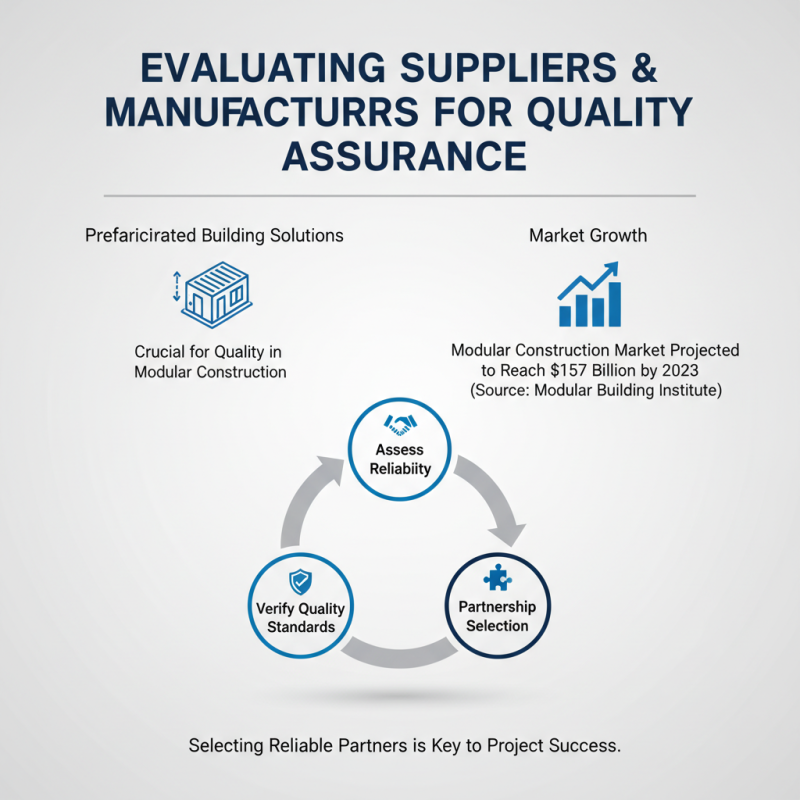
When considering prefabricated building solutions, evaluating suppliers and manufacturers is crucial for ensuring quality. The construction sector continues to shift towards modular methods. According to a report from the Modular Building Institute, the modular construction market is projected to reach $157 billion by 2023. This surge highlights the importance of selecting reliable partners.
Quality assurance starts with supplier evaluation. Check certifications and previous projects. It’s important to study their portfolio and client reviews. A supplier with a robust history in the modular sector often demonstrates reliability. Suppliers should maintain strict quality control processes. A 2020 study indicated that 40% of construction defects stem from material failures.
Ensure that the manufacturer employs advanced technology and skilled labor. Investigate their manufacturing processes, as transparency is key. Seek out partners who prioritize sustainability, as the industry moves towards eco-friendly practices. Reports indicate that 75% of projects now incorporate sustainable materials. However, a focus on cost can lead to compromises in quality. Balancing budget constraints with quality needs careful thought.