Ramtech Building Systems is a leading provider of modular building systems including relocatable, permanent and prefabricated constructions.
T (817) 473-9376
Email: sale@viennavahouses.com
Ramtech Bulding Systems
1400 US Hwy 287 South Mansfield, TX 76063
Choosing a small modular office building in 2026 means comparing more than price and floor area. Manufacturers differ in design support, factory quality controls, delivery planning, and the work required after installation. A brochure may show bright meeting rooms and clean lines. The practical questions are less glamorous: where will power enter, how will rainwater drain, and can the modules reach the site?
This guide introduces manufacturers through criteria buyers can verify, rather than treating a polished product page as proof. Look for clear specifications, documented materials, realistic lead times, and examples of completed projects. Ask whether the quoted price includes foundations, utility connections, transport, and commissioning. These details can change the total cost substantially. They also reveal how carefully a supplier has considered the project beyond the factory floor.
Fit matters. A compact office used for quiet desk work may need different insulation, ventilation, lighting, and acoustic treatment than a reception area or site office. Compare usable interior dimensions, not just external measurements. Check how doors, windows, storage, and accessible routes work together in the actual layout. Then confirm local requirements with qualified professionals; manufacturer information alone may not cover every site condition.
Some details are easy to overlook. That is worth admitting. A shortlist should be based on project needs, independently checkable evidence, and direct questions to each manufacturer. The strongest option is not automatically the largest or most familiar brand. It is the supplier whose documented capabilities, communication, and proposed building align with the intended use—and whose limitations are clear before an order is placed.
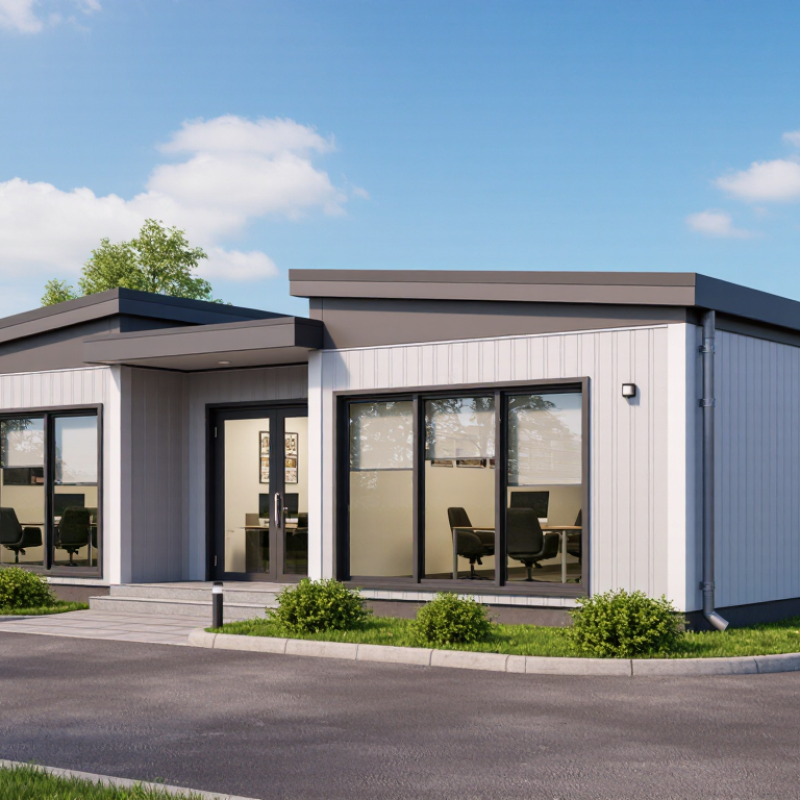
A small modular office building is a compact workspace assembled from factory-built sections, transported, and joined on a prepared site. Size alone does not define it. The layout must support daily work, including desks, clear walkways, storage, lighting, ventilation, and power. A 24-by-36-foot plan might fit four workstations, a meeting table, and a utility area, depending on wall and door placement.
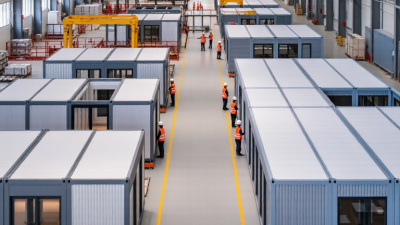
The defining feature is the construction process. Modules are built indoors under repeatable conditions, which can reduce weather exposure and help make schedules more predictable. Site work still matters. Foundations, drainage, utility connections, delivery access, and crane clearance can affect cost and timing. A narrow lane or soft ground may complicate installation, even when the building looks simple. These details are easy to underestimate.
A useful specification identifies expected occupancy, climate, insulation, acoustic needs, window placement, and possible expansion. Ask for drawings, material details, and a clear description of site preparation and commissioning. Local requirements vary, so confirm applicable approvals with qualified local professionals. Modular does not automatically mean portable or less expensive. Sometimes it is neither. Future expansion plans may also affect module dimensions, connection points, and site work.
Choosing the best small modular office building manufacturer in 2026 requires more than comparing catalog prices. The Modular Building Institute’s 2024 Permanent Modular Construction Annual Report valued the North American market at approximately $20.3 billion in 2023. This growth increases choice, but also creates uneven quality. Ask for completed office projects, production records, and independently verified structural, fire, energy, and accessibility compliance.
Factory control matters. McKinsey’s report, Modular Construction: From Projects to Products, found that modular methods can reduce schedules by 20–50% in suitable projects. However, that range is not guaranteed. Evaluate the manufacturer’s average delivery time, change-order history, and response to damaged components. A reliable supplier should provide BIM coordination, material traceability, moisture protection, and clear warranty terms. Check whether its factory can handle small orders without delaying them behind larger contracts.
Look closely at the details.
A useful site visit should include floor sealing, insulation joints, electrical testing, and loading procedures. Ask for lifecycle cost data, not only the initial quotation. The International Energy Agency continues to identify building efficiency as central to reducing operational energy demand, so verify insulation performance and HVAC assumptions. I would also interview recent clients, because polished samples can hide difficult installation experiences. My own evaluation would score communication, documentation, local code knowledge, and after-sales service equally with price. A low bid may become expensive when transport, foundation adjustments, or late revisions appear.
Leading Small Modular Office Building Manufacturers
Leading small modular office building manufacturers now compete on more than factory speed. The strongest suppliers combine structural engineering, fire safety, moisture control, and flexible interior planning. McKinsey’s 2019 report, Modular Construction: From Projects to Products, found that modular methods can reduce project schedules by 20% to 50%, with potential cost reductions reaching 20%. Those figures are useful benchmarks, not guarantees. Site access, local permits, foundation work, and transport distances can change the result quickly.
A practical assessment should examine factory quality records, welding documentation, insulation performance, and replacement-part support. The International Energy Agency reported in 2023 that buildings represent about 30% of global energy demand and 26% of energy-related emissions. Therefore, manufacturers should show measurable envelope performance, not only attractive renderings. Look for tested U-values, airtightness results, daylight strategies, and low-energy heating systems. Ask how office modules perform after five winters, not just after delivery.
The comparison is imperfect. Some manufacturers publish detailed data, while others provide vague efficiency claims. That gap matters. A reliable supplier explains exclusions, tolerances, maintenance duties, and expected service life in plain language. Smaller offices also need careful acoustic design. Thin partitions may save space, yet they can weaken privacy during calls. The best purchasing decision often comes from reviewing a completed building, speaking with its operator, and checking whether the promised details survived real use.
Choosing a small modular office manufacturer is less about the lowest quote and more about what arrives on site. Compare design flexibility first. Can the layout fit your team, storage needs, and site conditions? Ask for scaled floor plans, window placements, insulation details, and examples of finished interiors. A bright meeting room may look appealing in a rendering, but glare and limited wall space can affect daily work. Details matter.
Cost comparisons need the same scope. Check whether quotes include foundations, utility connections, transport, installation, and permits. A lower factory price may leave important site work out. Request a written list of exclusions and allowances. Delivery deserves equal scrutiny. Ask how long drawings, production, and installation usually take, and what could delay each stage. Get the schedule in writing, including delivery access requirements and weather contingencies. Some estimates still feel optimistic; that is worth questioning. A manufacturer’s clear answers, practical project examples, and willingness to discuss trade-offs can be more useful than polished promises.
2026 Best Small Modular Office Building Manufacturers?
Choosing a manufacturer for a small modular office starts with your project brief, not a glossy catalogue. Define occupancy, floor area, climate, access limits, fire performance, and installation dates. Ask for structural calculations, insulation values, electrical layouts, and a clear foundation plan. A reliable manufacturer explains assumptions instead of hiding them behind attractive renderings.
Visit a completed building if possible. Inspect door alignment, roof drainage, sealant joints, ventilation noise, and interior moisture marks. Request factory quality records and independent test documents. Speak with recent clients about delivery changes, defect repairs, and communication. My early mistake was comparing only unit prices. Transport, cranes, site preparation, permits, and future maintenance changed the real cost. Price still matters. It should not lead.
Tips: Use a written comparison sheet. Check warranty exclusions carefully. Ask who owns design changes after approval. Confirm manufacturing tolerances before ordering. Require a sample wall or finish panel when appearance matters. A capable team should provide a realistic programme, not an optimistic promise. If answers remain vague, pause the decision. That pause may protect your budget and schedule.
How to Choose a Manufacturer for Your Project
Use these suggested evaluation weights as a starting point when comparing manufacturers. They are a planning framework, not measured industry statistics or ratings of specific companies. Adjust the criteria to match your project’s budget, site, schedule, and building requirements.